
Case study
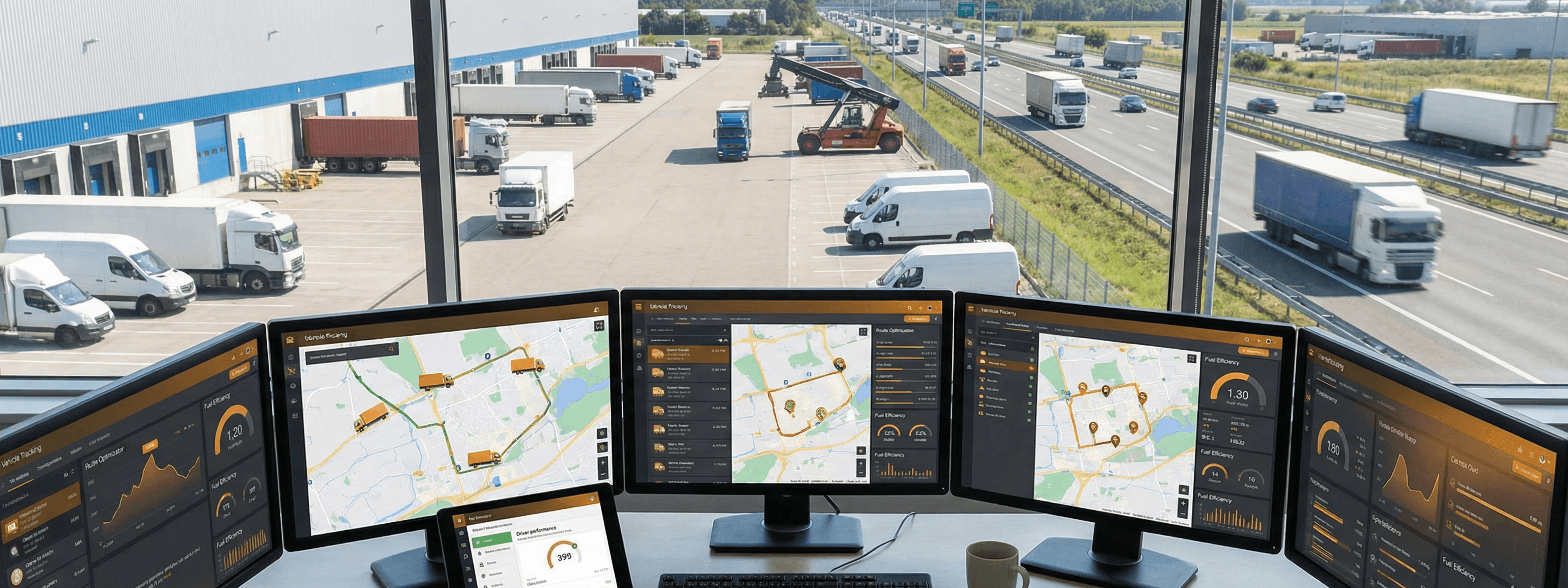
Fleet management system for real-time tracking and fuel control.
A custom fleet platform that gives dispatch and ops teams live visibility, better routing, proactive maintenance, and unified reporting through ERP/accounting sync.
Client
Oromia Coffee Farmers Cooperative Union (OCFCU)
Country
Ethiopia
Industry
Logistics & mobility
Main service
Custom Software Development
Duration
6 months
Delivery
Delivered with eTech S.C.
−40%
vehicle downtime; also −30% delivery delays and −20% fuel consumption
−30%
delivery delays
−20%
fuel consumption
The challenge
The cooperative had vehicles on the road every day to move its coffee, but decisions were based on delayed or incomplete data. The result was late deliveries, inefficient routes, reactive maintenance and unclear fuel use.
Visibility gaps: without live location data, deliveries ran late.
High running costs: poor route planning drove up fuel consumption.
Unplanned downtime: vehicles were serviced only after something broke, so they failed without warning.
Data silos: operations, accounting and fleet management each kept their own data.
Safety and compliance: without driver monitoring, safety standards were hard to enforce.
Fuel security: without fuel monitoring, theft and misuse were hard to spot or prevent.
Our approach
We built a fleet management system that combines real-time tracking, route optimisation, maintenance scheduling and driver and fuel monitoring, then connected it to the client's existing systems so the reports show what actually happens on the road.
1. Discovery and integration plan
Our engineers started by mapping the data silos between the existing ERP and accounting systems. The goal: every kilometre driven and every litre of fuel used flows straight into one set of reports.
2. Live tracking and route optimisation
We built a core module for real-time vehicle tracking and automated route planning, so drivers take the most efficient routes. That tackles fuel waste and late deliveries directly.
3. Proactive maintenance
Maintenance triggers and scheduling moved fleet care from reactive to proactive. The system tracks each vehicle's condition and books a service before it fails, so more of the fleet is available.
4. Monitoring and analytics
We added monitoring for driver behaviour and fuel use. With analytics on that data, the team spots unsafe driving and fuel loss early.
Results
Deliveries on time: delivery delays down 30%.
Fuel savings: fuel consumption down 20%.
More uptime: unplanned vehicle downtime down 40%.
Safer driving: driver compliance with safety rules up 50%.
Less fuel theft: stopping fuel theft and misuse saved a further 10% in costs.
Fleet efficiency: overall fleet efficiency up 25%.
What it enabled
With one set of data and live visibility, the cooperative can grow its fleet without growing the admin work. The system is also the base for ongoing tuning of routing rules, maintenance thresholds and fuel controls as conditions change.